Your LinkedIn Content Is Getting Engagement. So Why Isn't It Generating Business?

Updated: Sep 28
TL;DR: LinkedIn content engagement is not the same thing as business impact. The useful scoreboard moves from reach to relevance, trust, opportunity and commercial influence. A smaller audience of the right founders, CXOs, buyers or partners can be far more valuable than a large audience that will never create a meaningful business conversation.

The real problem is not low engagement. It is low commercial relevance.
There is a peculiar trap in professional content: you can become increasingly visible to an increasingly irrelevant audience. A post can attract hundreds of reactions because it is relatable, optimistic or emotionally resonant, yet have almost no connection to the problem your company solves. Meanwhile, a narrowly written post about a specific operational or strategic problem may receive modest engagement but put you in front of three people who could actually buy from you.
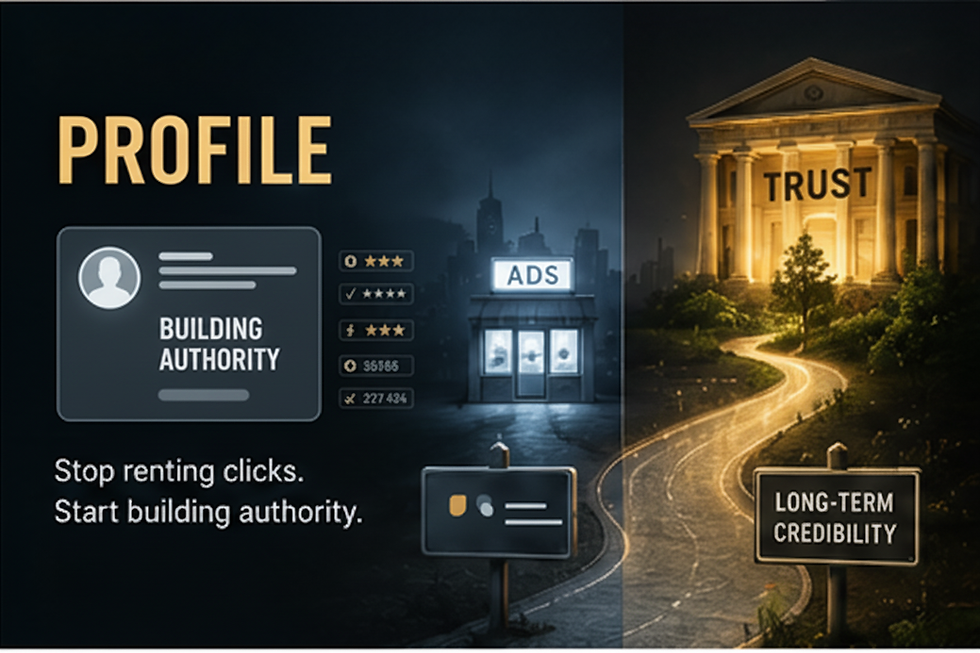
That distinction matters particularly for founders and CXOs. Your personal brand is not a media vanity project. At its best, it reduces the amount of uncertainty a prospective customer, investor, partner or employee has to resolve before deciding to engage with you. Content is one mechanism for creating that familiarity. It is not the end product.
Why engagement is such a seductive metric
Platforms naturally make engagement visible because it is easy to count. Likes, comments, shares and follower growth give you a reassuring stream of numbers. But visibility is not the same as influence, and influence is not the same as commercial impact.
The distinction is easiest to see when you separate three layers of attention: reach, relevance and response. Reach tells you how many people encountered the content. Relevance tells you whether those people resemble the market you want to serve. Response tells you whether anything changed afterward, such as a profile visit, a connection request, an inbound message, a referral, a meeting or an opportunity.
A personal branding strategy becomes strategically useful when it moves beyond the first layer. The objective is not to eliminate engagement. It is to stop treating engagement as the final proof that your content worked.
The audience you build can become the audience you are stuck with
One of the more uncomfortable exercises we recommend for your LinkedIN content strategy is to inspect who is actually engaging with your content. Not just the number, but the composition. Are these founders, CXOs, decision-makers and potential partners? Are they from the industries and markets where you want to grow? Or are they mostly peers, fellow creators, marketers and people who simply enjoy your writing?
There is nothing inherently wrong with the latter group. A healthy professional network should contain people who admire your work even when they will never buy from you. The problem arises when you mistake a large professional audience for a qualified commercial audience.
At Brain Box Catalysts, one pattern we have repeatedly seen is that the most commercially valuable content is often more specific than the founder initially wants it to be. Founders worry that talking about one industry, one business problem or one buyer profile will shrink their reach. In reality, specificity can increase the quality of the attention because it gives the right person a reason to think, ‘This is exactly the problem I am dealing with.’
The 30-post audit that changes the conversation
Before changing your content strategy, audit it. Take your last 20 to 30 posts and record four things: the subject, the engagement, who engaged and what happened afterward. The fourth column is the one most people omit, because it requires connecting content to business activity rather than simply reading platform analytics.
Did a relevant prospect comment, connect or message you?
Did anyone mention the post during a sales conversation?
Did it produce a profile visit from someone in your target market?
Did it create a speaking, podcast, media, partnership or referral opportunity?
Did the post strengthen an idea or area of expertise you want to own?
You are not trying to attribute every rupee of revenue to a LinkedIn post. That would create false precision. You are trying to identify patterns. Which subjects attract the right people? Which formats create meaningful conversations? Which ideas make prospects remember what you actually do?
Your content needs a commercial spine
A useful founder-branding strategy has an underlying commercial logic even when individual posts are not promotional. Think of it as a spine running through the content. Your posts should repeatedly reinforce the problems you understand, the decisions you have made, the lessons you have earned and the category of work for which you want to be remembered.
This is where founder content differs from generic creator content. A creator can optimize for attention because attention itself is often the product. A founder needs attention to accumulate into credibility. The content should make the reader progressively more certain about three things: what you understand, how you think and where you can create value.
The CTA is not the strategy, but the absence of one can expose a strategy gap
There is a tendency to swing between two extremes. One is never asking for anything because selling feels uncomfortable. The other is turning every post into a disguised pitch. Neither is particularly sophisticated.
A better approach is to create proportionate next steps. If the post is educational, invite a relevant discussion. If it addresses a problem you solve, make that connection explicit. If you have a useful resource, offer it. If the goal is authority-building, direct readers toward a deeper article, podcast episode or case study. The CTA should match the reader's level of intent.
In other words, do not ask a stranger for a purchase when what you have earned is curiosity. But do not force a genuinely interested prospect to guess what you do either.
Build for the buying journey, not the news feed
The strongest personal brands rarely convert in a single post. A prospective client may encounter your content repeatedly, listen to a podcast episode, visit your profile, search your name, read a case study and only then initiate a conversation. Sometimes the person who saw the original post will never contact you. They may simply remember you and recommend you when the relevant situation appears six months later.
That means the real asset you are building is not a collection of high-performing posts. It is a body of evidence. Over time, the evidence should make your positioning easier to understand and your credibility easier to verify.
A better personal-branding dashboard
If the purpose of your personal brand is business growth, consider tracking a hierarchy of signals rather than one vanity metric.
Attention: reach, impressions and follower growth.
Relevance: percentage of engagement and profile activity from your target audience.
Trust: inbound messages, referrals, mentions and prospects referencing your content.
Opportunity: meetings, speaking invitations, partnerships, media opportunities and qualified leads.
Commercial impact: opportunities influenced, pipeline created or accelerated, and revenue where attribution is reasonably clear.
The hierarchy matters. A post with 200 likes from the wrong audience may be less valuable than one with 20 reactions from the exact people you want to reach. The latter is not a failure. It may be a much better business signal.
Do not throw away the audience you already built
When founders discover an audience mismatch, the instinct is often to reinvent everything. New content pillars, a new tone, a new visual identity and perhaps even a dramatic announcement about a ‘new direction.’ Usually, none of that is necessary.
Course correction is more powerful than reinvention. Keep the subjects that genuinely represent your expertise. Gradually increase the proportion of content aimed at your ideal buyer. Become more precise about the problems you discuss. Show more of your actual thinking and fewer generic observations. Introduce stronger proof through case studies, interviews, media coverage, client outcomes and lived experience. Over several months, the composition of your audience begins to change.
The founder-branding test I would use
Here is the simplest test: if someone read ten of your posts without looking at your profile, would they know what you are unusually good at? More importantly, would they know which kind of business problem you are capable of helping solve?
If the answer is no, you probably do not need more content. You need sharper positioning.
Personal branding becomes commercially powerful when attention compounds into recognition, recognition compounds into trust, and trust lowers the friction around the next conversation. The objective is therefore not to become famous inside your feed. It is to become credible in the mind of the people who matter to your business.
Personal branding is often judged by the wrong scoreboard. A growing audience, strong engagement and rising follower counts can create the impression that a founder's brand is working, while the commercial reality tells a different story. The more useful question is not whether people are paying attention. It is whether the right people are paying attention, and whether that attention is creating trust, conversations and opportunities.
FAQs
Is high LinkedIn engagement a sign that personal branding is working?
Not necessarily. Engagement should be evaluated alongside audience relevance, inbound conversations, referrals, opportunities and commercial influence.
What matters more than follower count?
The quality and relevance of the people paying attention, plus whether that attention creates trust and useful business outcomes.
Should every LinkedIn post have a CTA?
No. The next step should match the reader’s level of intent; sometimes the right outcome is deeper understanding or continued exposure to your ideas.
How often should founders audit LinkedIn content?
A practical approach is a deeper review every quarter or after roughly 20 to 30 substantial posts, looking for patterns rather than judging individual posts in isolation.
About Brain Box Catalysts
Brain Box Catalysts is a PR and personal branding agency focused on helping founders, CXOs and experts become easier to discover, understand and trust through founder positioning, thought leadership, content and media.